CONTENT OPERATIONS / FEISHU
Feishu Content Operations Workbench.
Connect production and account reviews with AI hit analysis, script checks and feedback checklists.
MIT source & local demo ↗A shared production workflow
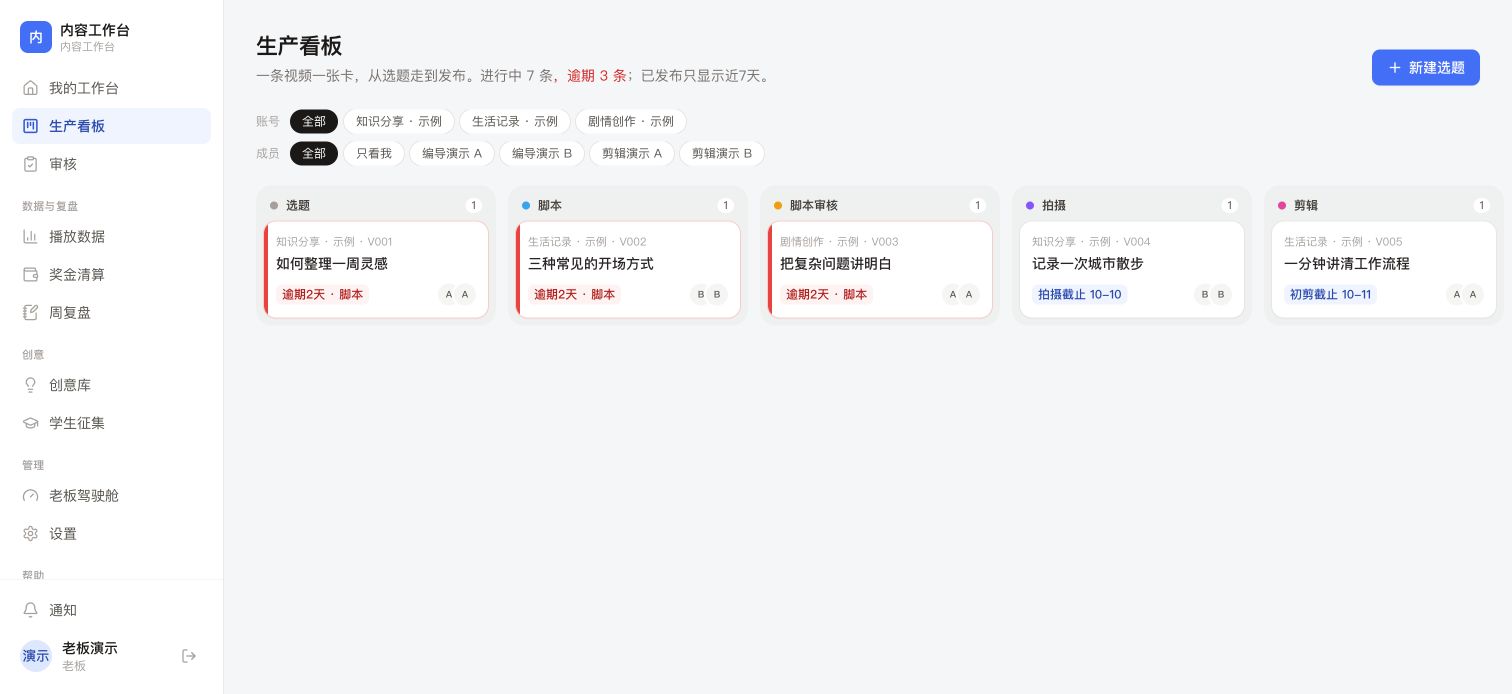
Each video moves through eight stages with a writer, editor, deadline and review record. Simpler briefs provide account-owner defaults and publication-link recognition while scheduling remains manual. Forms recover browser-local drafts, handoff links retain versions and the detail page prioritizes the current next action.
Editing workload and settlement
Delivered editing work is measured by complexity and extra units, with historical ownership retained. Configurable bonus tiers support top-ups, per-person summaries, published locks and CSV export.
Account weekly retrospectives
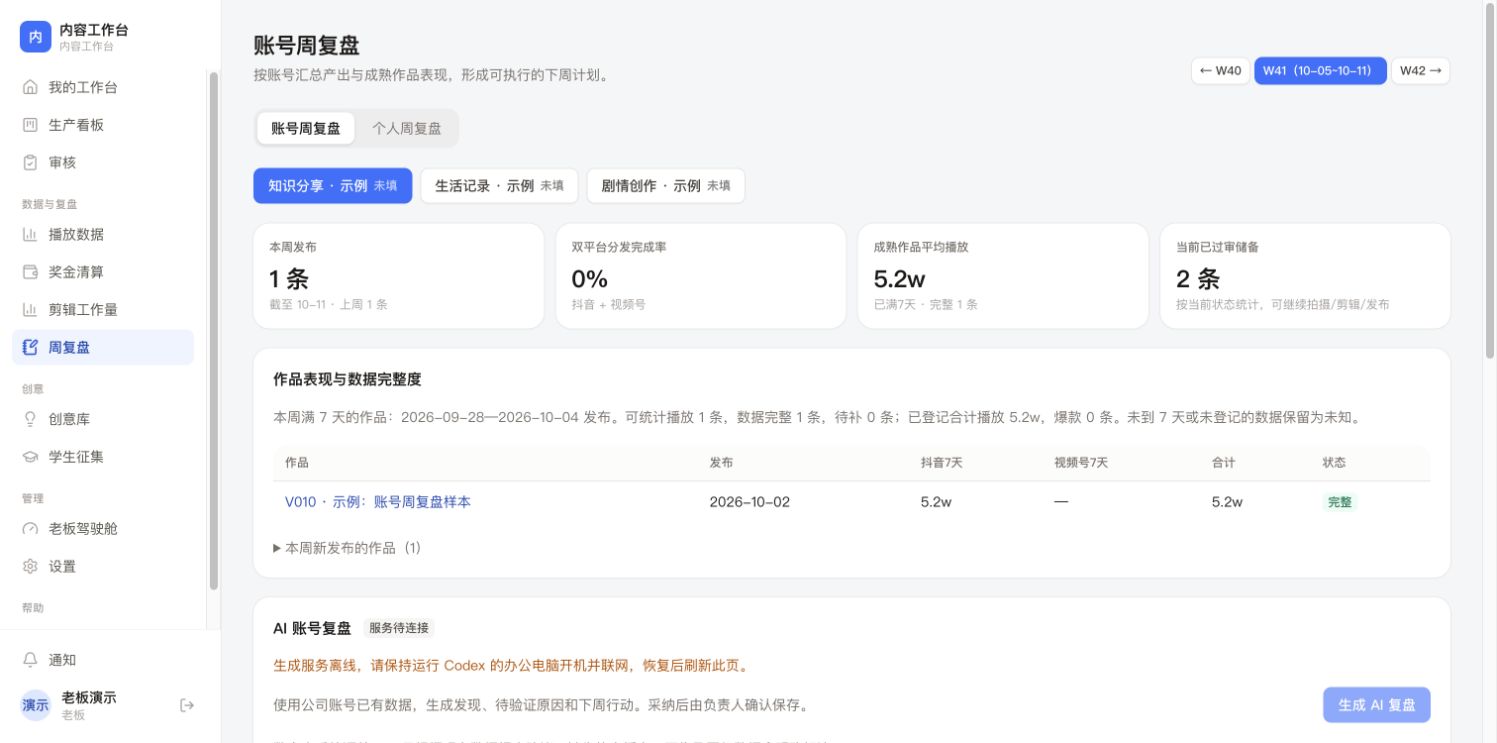
Review each account’s publishing pace, mature day-7 results, data completeness and strong/weak videos. Personal reviews remain available. Optional local Codex CLI produces structured drafts from workspace data; a human reviews and saves them.
Daily play metrics with spending limits
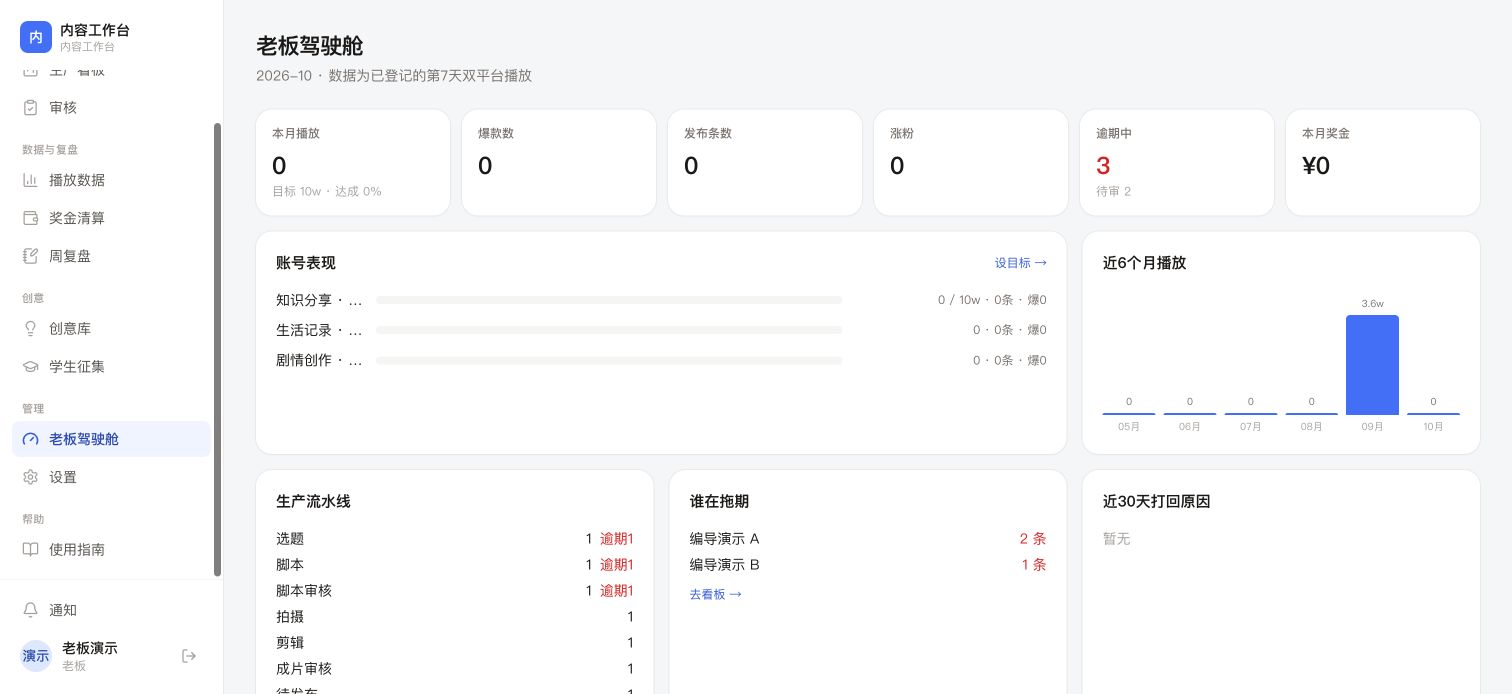
Optional TikHub integration batches up to 50 Douyin videos and retains daily cumulative views. Daily caps, deduplication and retry limits control requests. Exact-date day-7/day-30 suggestions require confirmation; WeChat Channels views remain manual. Monthly totals separate latest sampled views from day-7 KPIs and retain unknown measurements as missing.
Research hits from a selected Douyin account
Query up to 60 posts from the last 90 days and rank the top 10 with known views. Queries cache for 24 hours and share the daily request budget. Details and transcription run only after selecting a video; transcripts can also be pasted. Server-side FFmpeg and Whisper.cpp prepare text for local Codex analysis. Visual editing and retention are outside its scope.
Four task-specific AI helpers
Turn an idea into an editable brief, check scripts against required shots, organize the latest rejection feedback and explain rule-based account anomalies. People review the results; AI never submits briefs, advances approvals or changes compensation. Helpers share a 30-job daily cap and a 24-hour per-user/input cache.
Implementation and validation
Built with Next.js, React, TypeScript and SQLite. The public edition passes 117 automated tests, type checks and a production build, covering access control, workflow, versioned handoffs, data completeness, AI queues, transcription boundaries and spending limits. AI needs a signed-in CLI and an awake, online computer.
MIT public edition
The independent MIT repository includes a local demo with fictitious people, accounts, metrics and invalid sample links. It excludes employee records, production databases, credentials and internal deployment configuration. Paid data services and AI integrations require your own setup.
A closer look